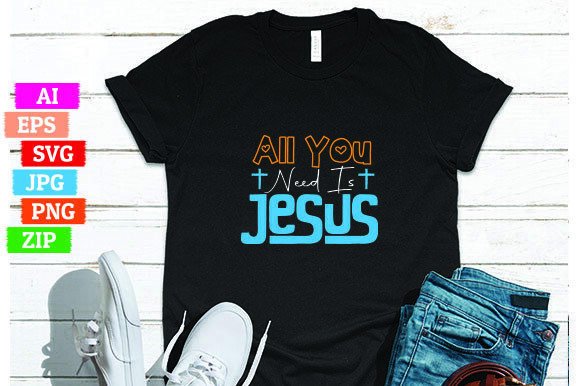
All You Need is Jesus
First Impressions: Simplicity with Quiet Confidence
When I opened All You Need is Jesus for the first time, I didn’t see a slogan—I saw a quiet, centered statement. The layout is clean and balanced: no excessive flourishes, no distracting icons or halos, just thoughtful letter spacing and gentle curve in the font that feels hand-drawn but precise. It’s not flashy, and that’s its strength. As an embroidery designer who’s stitched hundreds of faith-based phrases, I immediately sensed this one would hold up across fabric types—not because it shouts, but because it breathes.
Real Project Test: A Linen Tote Bag for a Local Boutique
Last week, I used All You Need is Jesus on a natural linen tote for a small-town gift shop’s Easter collection. The bag had subtle slubs and low stretch—ideal for crisp satin stitch definition. I chose soft ecru thread on oat-colored linen, stabilized with medium-weight cutaway. The result? Legible at 4 inches wide, elegant when held at arm’s length, and deeply personal when carried. Customers paused, smiled, and asked where the phrase came from—not because it was bold, but because it felt intentional. That’s the difference between decoration and resonance.
Where It Shines (and Where It Asks for Care)
All You Need is Jesus works beautifully on custom apparel like sweatshirts and t-shirts—especially relaxed-fit cotton blends—where its calm rhythm complements casual wear without competing. It reads clearly on baby onesies (use lightweight stabilizer and low-density fill), and translates well to embroidered patches meant for backpacks or denim jackets. On tea towels and pillow covers, it adds warmth without clutter. For holiday embroidery—think Christmas stockings or Easter aprons—it carries reverence without sentimentality.
But here’s what I watched closely: on dark fabric, contrast matters more than usual. The design doesn’t include heavy outlines, so thread color choice directly affects legibility. On curved surfaces like caps, I recommend testing the top arc first—some versions of this phrase compress poorly near the crown if digitized too tightly. And on thin or stretchy fabric (like jersey tees), skip dense fill stitches; opt for lighter fill or combine with running stitch outlines to prevent puckering.
What It Does for Your Craft Business
As an Etsy seller and small shop product developer, I’ve seen how certain phrases build trust faster than others. All You Need is Jesus lands with sincerity—not trend-chasing, not overly stylized. That authenticity helps handmade product listings convert better, especially among buyers seeking meaningful, non-generic gifts. It also pairs cleanly with minimalist branding: think neutral packaging, soft photography, and quiet copy. No need to over-explain. The phrase does the work.
For commercial embroidery projects—say, stitching 50 matching sweatshirts for a church youth group—the design scales predictably. Its consistent stroke weight means fewer thread breaks and smoother machine runs. And because it avoids tiny serifs or interlocking letters, it holds up in printable mockups and digital embroidery file previews—critical when listing on Etsy or sending proofs to clients.
Design Notes Every Embroiderer Should Check
- Test on scrap fabric first—especially if using textured weaves or blends. Linen, canvas, and midweight cotton behave differently under needle tension.
- Review stitch density. If your version includes heavy satin columns or tight fill areas, reduce density slightly for breathable fabrics or baby items.
- Confirm hoop size compatibility. This design fits comfortably in a 4×4 hoop at standard size—but verify before hooping a curved surface like a cap front.
- Inspect small details: look for any fragile joins in the lettering (e.g., the crossbar of the “A” or curve of the “J”) that might vanish at smaller sizes.
- Try black-and-white mockups. Since this phrase relies on tone and balance—not color—it should read strongly even without thread nuance.
- Compare light vs. dark backgrounds. On navy or charcoal, a cream or light gray thread often reads warmer and more grounded than stark white.
- Use proper stabilizer. Cutaway for stable fabrics, tear-away for lighter cottons, and lightweight fusible for knits.
- Check licensing before selling finished items. If you’re offering personalized gifts or wholesale embroidered products, confirm whether the embroidery file permits commercial use.
Not Just a T-Shirt Design—A Thoughtful Anchor
Calling All You Need is Jesus a “T-Shirt Design” undersells it. Yes, it works on tees—but its real value is as a versatile, emotionally intelligent design asset. It supports storytelling on nursery decor, adds quiet dignity to wedding guest favors, and grounds boutique merchandise without leaning into cliché. Unlike busier faith-based motifs, it leaves room for the wearer’s own meaning. That openness is rare—and valuable—for creative entrepreneurs building long-term customer relationships.
Final Stitch: Practical, Not Perfect
I don’t reach for All You Need is Jesus when I want attention-grabbing novelty. I reach for it when I want clarity, consistency, and quiet impact—on a kitchen towel gifted to a new mom, on a patch sewn onto a volunteer’s jacket, on a sweatshirt worn by someone who needs reminding on a hard day. It’s not flawless in every technical sense—no embroidery file is—but it’s faithful to its purpose: to land gently, read clearly, and stay true across real-world uses. That’s the mark of a design that earns its place in your embroidery project queue, your craft business catalog, and your customers’ daily lives.